
Biomechanical Assessment · In person, Waterloo, Iowa
Find the reason your body keeps hurting.
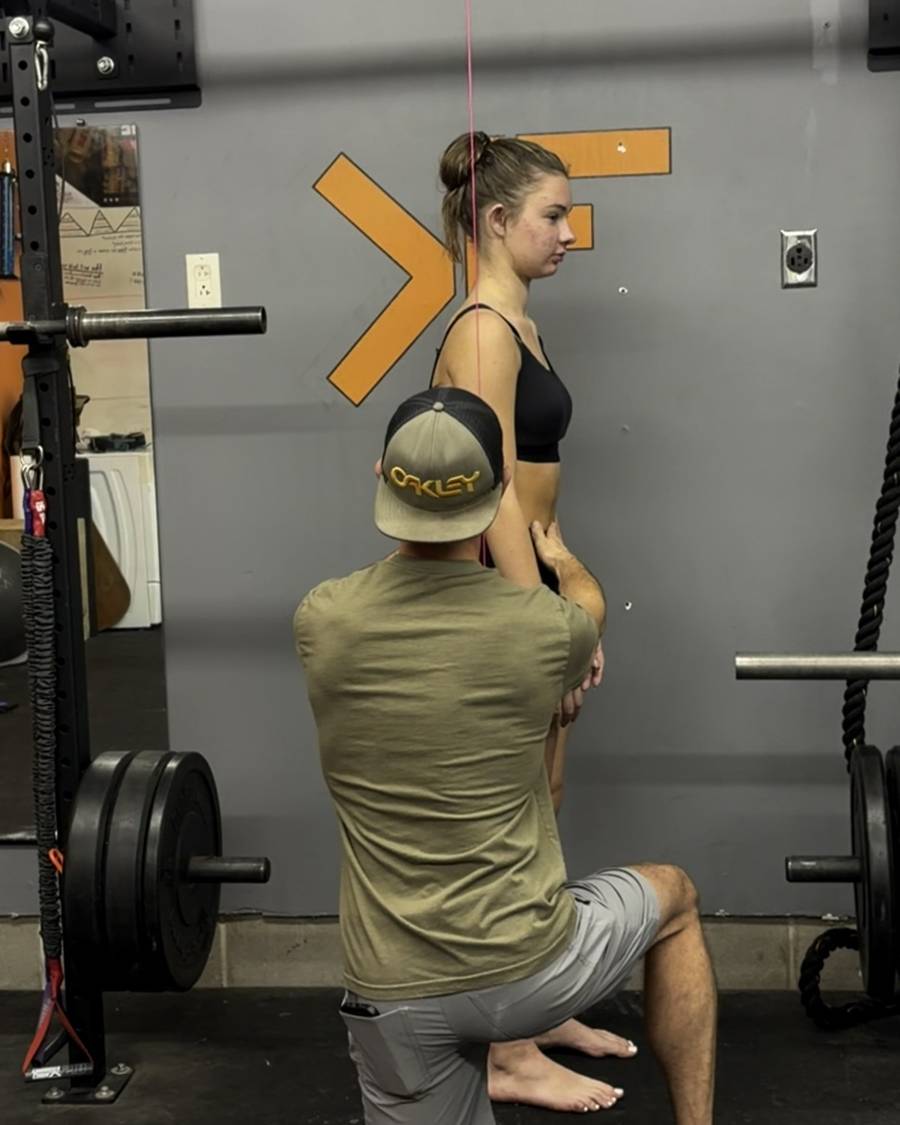
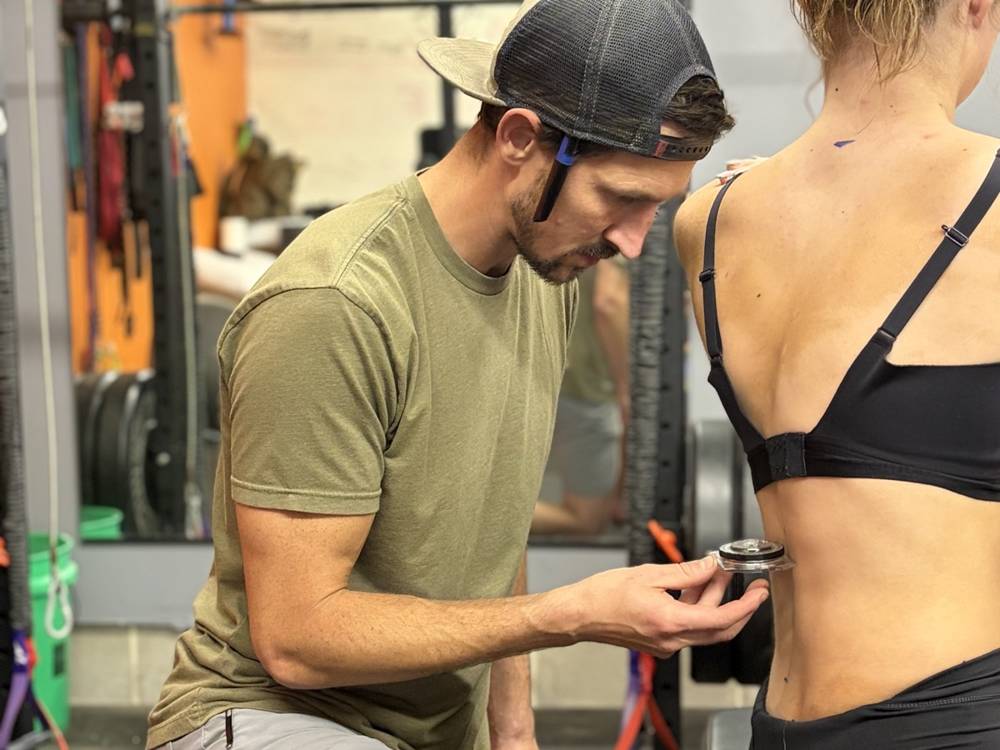
A head-to-toe CHEK assessment measures how you stand, breathe, stabilize and move. Then the findings become a corrective program built for your body, not a generic stretch sheet.
CHEK stands for Corrective Holistic Exercise Kinesiology, the assessment and program-design system Nick trained in to Master Practitioner level.
Is this for you?
Pain that keeps coming back is a pattern, not bad luck.
Most people book an assessment after the quick fixes have stopped working. If any of these sound familiar, the assessment is where to start.
- Low back pain that returns every few months
- Neck and shoulder tension that never fully lets go
- Hip, knee or foot pain with no clear injury
- "PT or chiro helps for a week, then it's back"
- Rounded shoulders, forward head, one hip higher
- Recurring injuries in training or sport
- Plateaued strength or performance
- Core weakness after pregnancy or surgery
- Pain with sitting, standing or sleeping
- Want a baseline before starting a program
Why the whole body
Where it hurts is rarely where the problem is.
The body is one connected system. Treat the sore spot and it comes back; find the link in the chain that is not doing its job and the sore spot stops needing to compensate.
What gets measured
Six areas, measured against known norms
Every test on this list has a normal range. You leave knowing your numbers, which ones are off, and what each one has to do with your pain.
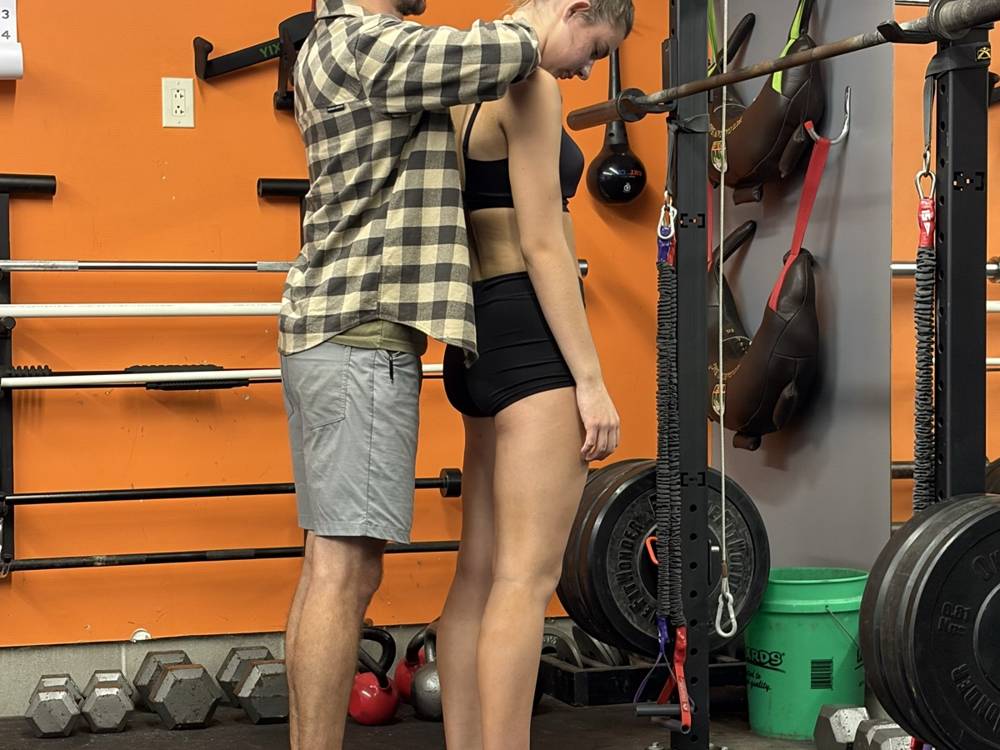
 1 · Posture
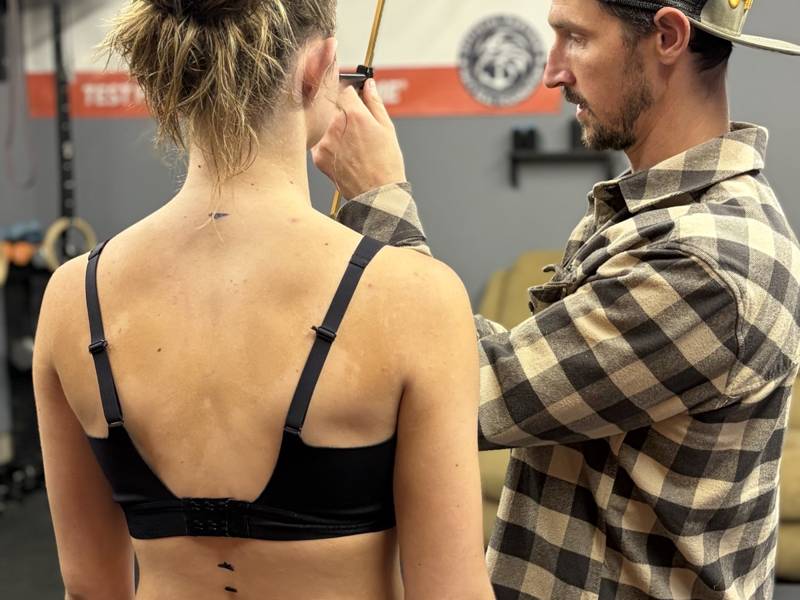
Static posture on a plumb line
How you stand when nobody is watching, measured, not eyeballed.
Includes: head carriage, first-rib angle, pelvic tilt and torsion, thoracic and lumbar curves, true and apparent leg length, weight shift.
 2 · Breathing
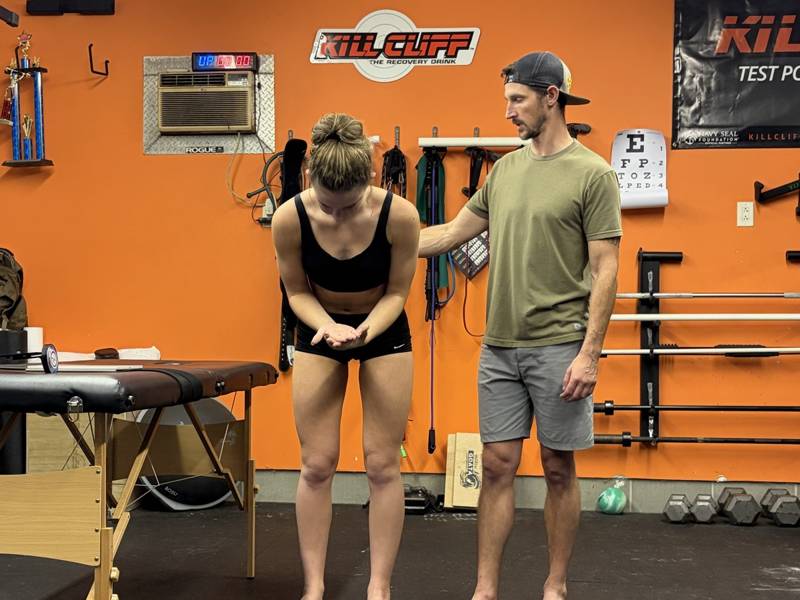
Breathing pattern
Breathing drives core stability and nervous-system state. Most pain patterns start here.
Includes: breathing-pattern observation, rib expansion, diaphragm and rib palpation.
 3 · Core
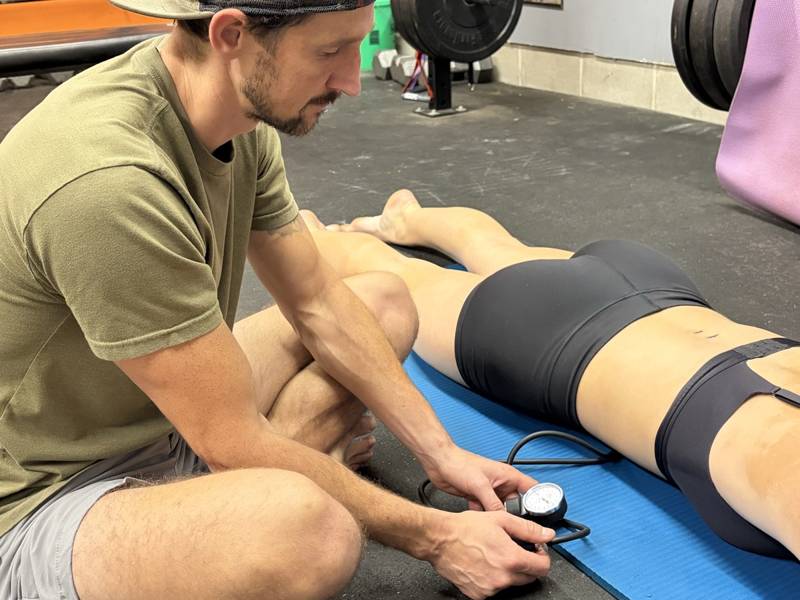
Core function
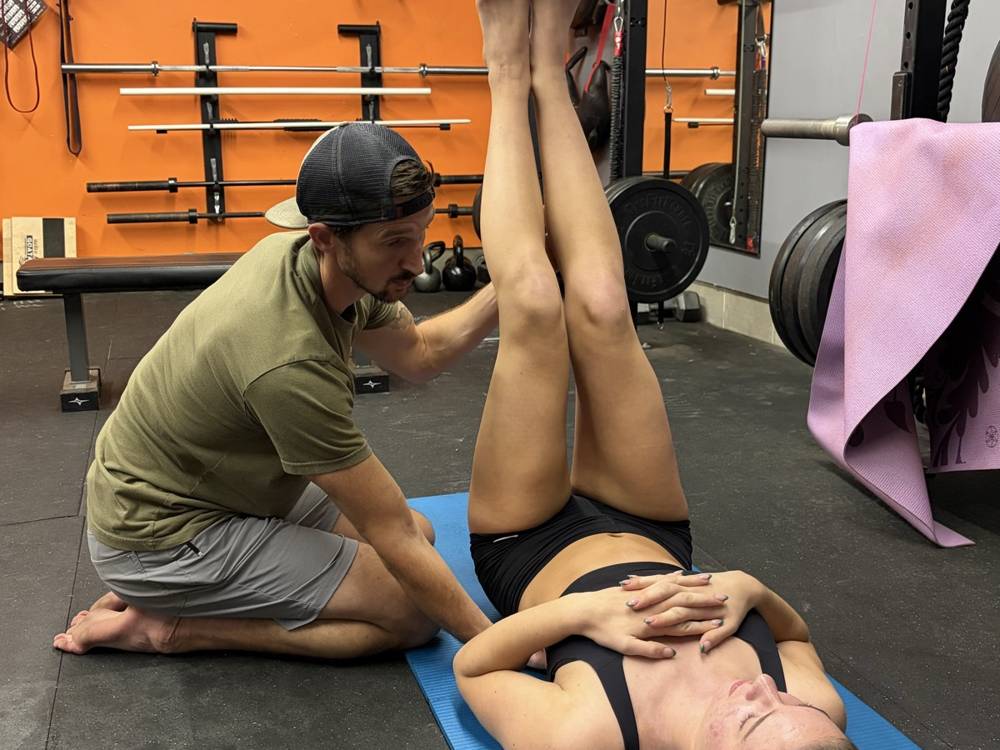
Not how many sit-ups you can do. Whether the deep stabilizers fire first, on both sides.
Includes: prone TVA test, forward-flexion activation, lower abdominal coordination and strength, multifidus, Janda's upper abdominal test, oblique dominance.
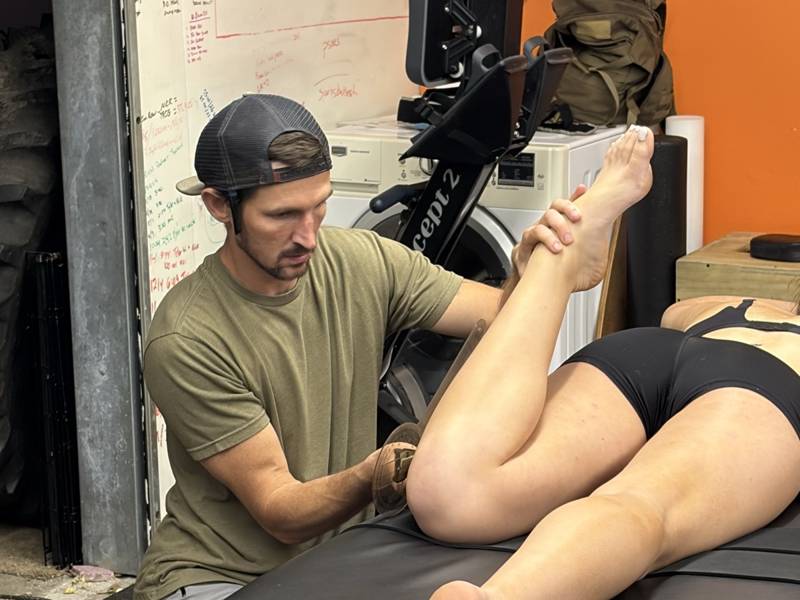 4 · Length-tension
Muscle length and balance
Which muscles are short and overworking, which are long and switched off, left versus right.
Includes: Thomas test, Ober's, pec major and minor, levator scapulae, QL side bend, hip rotation, ankle dorsiflexion, glute medius strength, Sorensen back endurance.
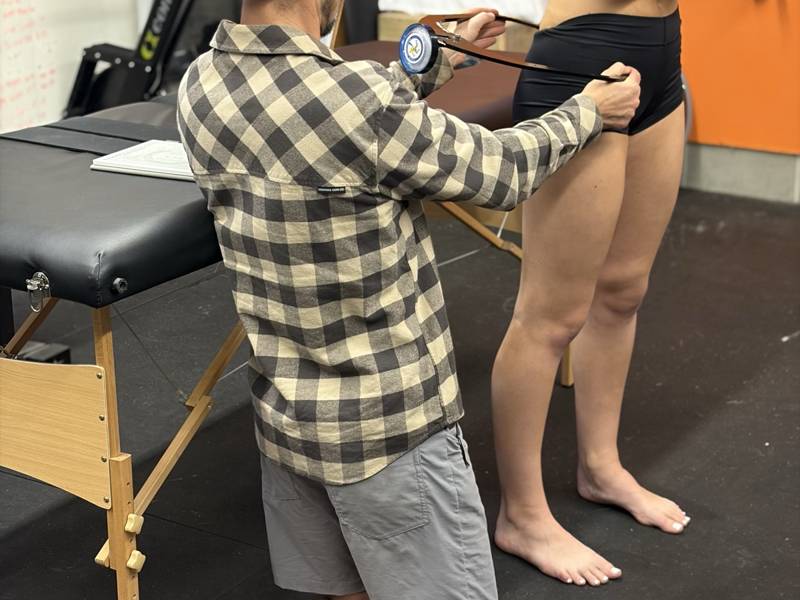 5 · Range of motion
Spine and joint mobility
Measured with an inclinometer so progress is a number, not a feeling.
Includes: cervical, thoracic and lumbar flexion, extension and rotation; hip, knee and ankle ranges; scapular rhythm.
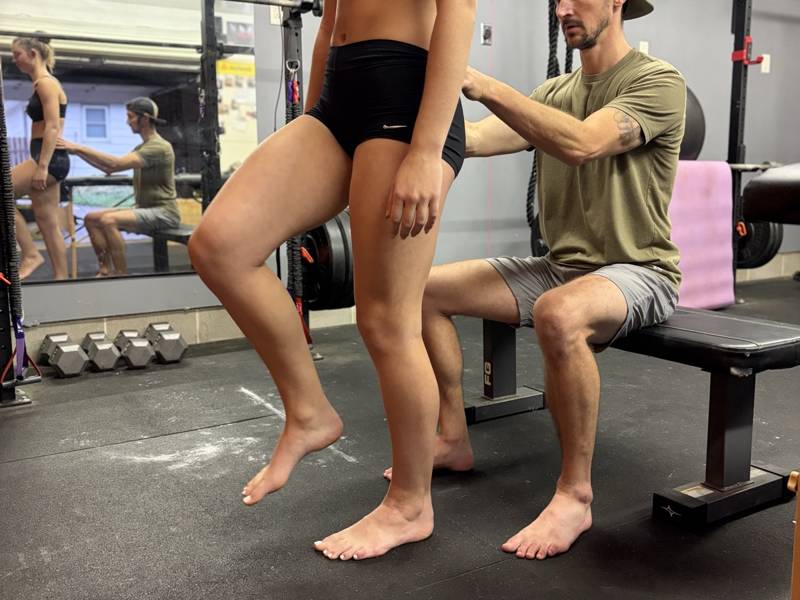 6 · Movement
Primal Pattern movements
The seven patterns every daily task is built from, watched under load.
Includes: squat, bend, lunge, push, pull, twist and gait, plus crawling patterns where indicated.
How it works
Three steps from first call to your program
- 1
Free call and intake
A 20-minute call to hear your story. Then intake forms: health history, the CHEK Health Appraisal Questionnaire, and a pain diagram.
Before your visit - 2
The assessment
In person in Waterloo, Iowa. Plan on about two hours. Nick measures and explains as he goes, so nothing is a mystery.
Visit 1 - 3
Your program visit
A second visit to go over your findings report and learn your corrective program in person: the mobilizations, stretches and corrective exercises, in the right order, with the reasoning for each.
Visit 2
What you walk away with
A map, and the first steps on it
- Your findings report. Every measurement, the normal range, and what it means for your pain.
- A phased corrective program. Which stretches, which mobilizations, which core work, in what order, with the reasoning for each.
- Movements to hold off on for now. The exercises that are feeding the pattern, and what to do instead.
- Lifestyle factors that are loading the system. Pulled from your health appraisal: sleep, stress, digestion.
- A clear next step. Fascial Stretch Therapy, coaching or lab work when they would help, and nothing when they would not.
Your practitioner
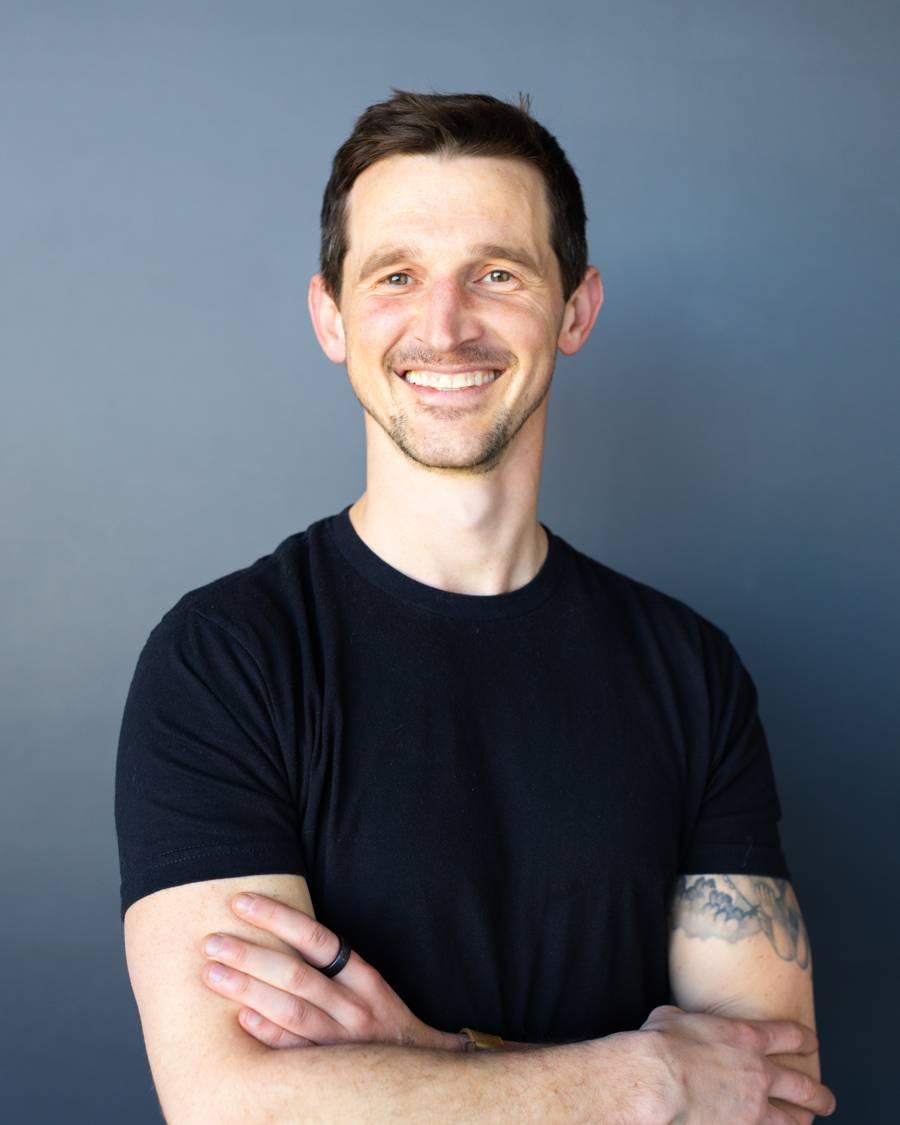
Nick Kuhle
Nick has assessed and corrected movement for more than ten years, first as an exercise scientist and then through the CHEK Institute's full practitioner track. The same eye that reads a GI-MAP reads a plumb line: find the pattern, fix the cause, let the body do the rest.
- CHEK Master Practitioner (Corrective Holistic Exercise Kinesiology)
- Master's degree in Exercise Science
- Fascial Stretch Therapy practitioner
- Functional Diagnostic Nutrition Practitioner (FDN-P)
"My back is feeling so incredibly good. I had to note it! Obviously I'll keep doing the exercises to try to realign things and get better. But wow, I'm feeling it like 95 to 98%."Assessment client · by text, one week into the corrective program
Good questions
Before you book
What should I wear?
Shorts and a fitted top or sports bra. Posture and spinal curves are measured against bony landmarks, so loose clothing gets in the way.
Do I need a referral or a diagnosis?
No. Bring any imaging or reports you have, but the assessment stands on its own.
Does this replace physical therapy or chiropractic?
No, and it is not medical treatment. It finds the pattern behind the pain and gives you a program to change it. Nick is happy to work alongside your PT, chiropractor or physician.
Can the assessment be done online?
The full assessment is hands-on and done in person. If you are not local, book a free call and Nick will tell you what can be done remotely.
How soon will I feel a difference?
Many people feel a change within the first two weeks of a corrective program, often from breathing and core work alone. Lasting change shows up in the numbers when you re-test, which is available as an add-on.
How does this fit with Fascial Stretch Therapy?
FST releases restriction; the assessment tells us which restrictions matter and what to strengthen once they let go. Many clients do both.
Also at KuhleFit
Build on the assessment
Stop treating the symptom. Measure the cause.
Book a free 20-minute call to talk through your history and get on the schedule.
